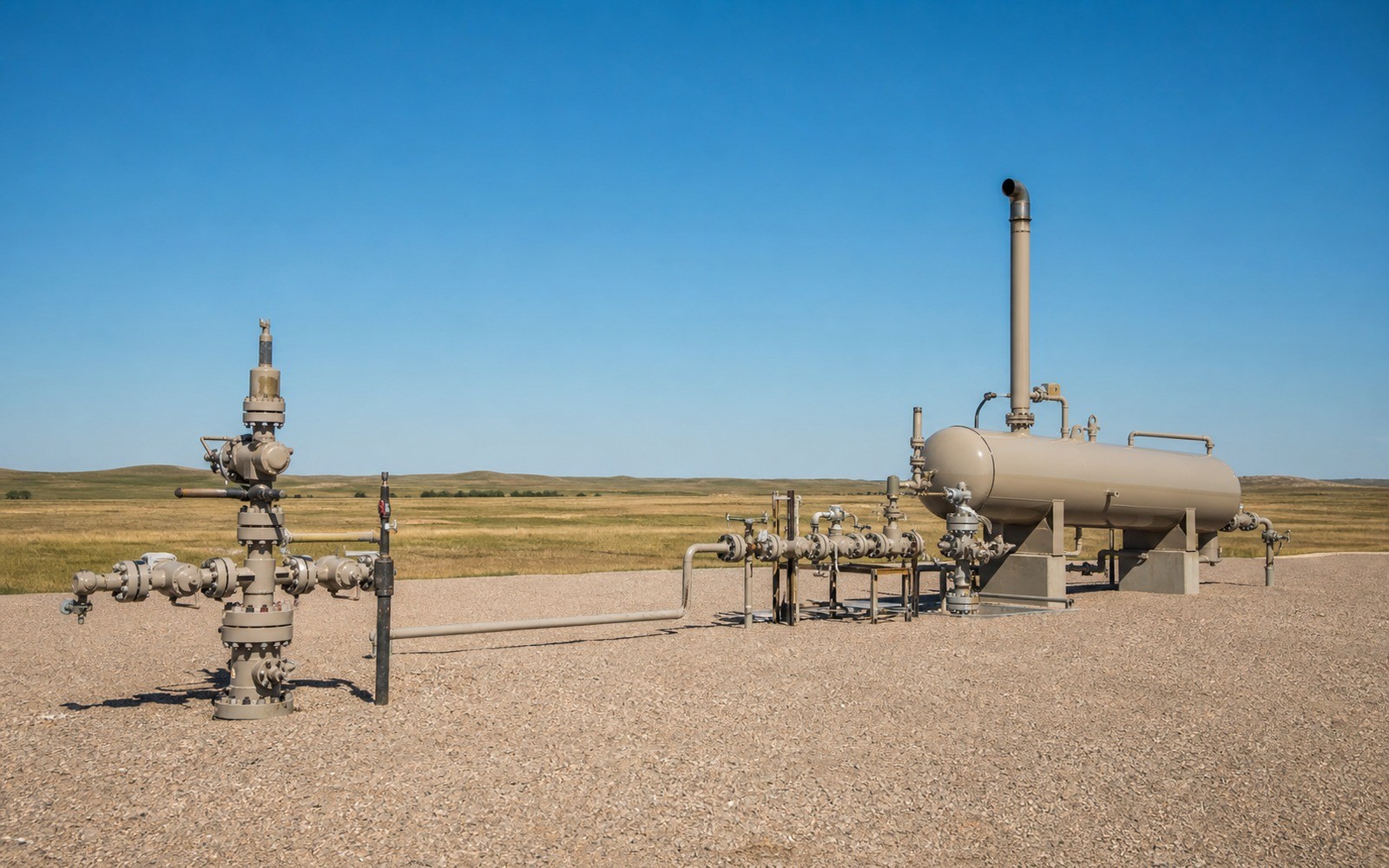
Glazier sits in the Texas Panhandle's Hemphill County, deep gas country on the western edge of the Anadarko Basin's granite wash trend.
This part of the Panhandle has a long production history running through multiple formations, older vertical wells drilled decades ago alongside newer horizontal granite wash development. Ranch families here have often held mineral interests for generations, sometimes with production from more than one era on the same tract.
Glazier itself is a small crossroads community, but the surrounding acreage has real production history behind it. Winters are hard and the land is dry, cattle and wheat country that's leaned on royalty income to smooth out lean years.
Granite wash and older vertical wells
Granite wash wells tend to be deep, tight gas formations that produce differently than a shallower conventional well. If your tract carries both an old vertical well and a newer horizontal granite wash unit, we evaluate each wellbore separately since their production and decline patterns don't match.
Confirming ownership through Hemphill County
We pull your deed and prior transfers from the Hemphill County Clerk's office and match your legal description to the correct Railroad Commission unit or units. Panhandle ranch deeds sometimes carry unusual depth reservations from decades-old family transactions, which we read carefully.
What determines your offer
Combined production across whichever wells apply to your tract, current gas and NGL pricing, and remaining reserve life all factor in. We're upfront about how each piece affects the final number.
Place the county tract on the basin board
The local file should tie the county record and legal description to the relevant basin, formation, field, unit, wells, permits, and operator position. A surface address can help find the tract, but it does not establish the mineral interest or prove participation in nearby development.
Read the local well vintages
Producing wells, shut-in wells, intermittent wells, newer laterals, older vertical wells, nearby completions, and general operator acreage in the surrounding area belong in separate evidence lanes. The paid property history carries more weight than a rig or permit that does not include the subject acreage.
Reconcile the ownership line
Deeds, reservations, leases, assignments, probate or trust records, division orders, unit documents, payor records, and statements should all point to the same local interest. Acreage, fractions, burdens, depths, products, and the paid decimal stay open until the supporting records agree.
Compare the deed and closing terms
A written offer for the tract should state the exact interest conveyed, effective date, receivables, reservations, title standard, curative responsibility, adjustment rights, payment conditions, and recording sequence. A strong headline number can still carry a broad deed or a weak closing condition.
Texas Owner Questions
What is granite wash and how does it affect your minerals?
It's a tight gas formation common in this part of the Anadarko Basin. Wells targeting it behave differently than shallower conventional wells, and we evaluate your specific well's actual production.
Your family has an old well and a newer well on the same land. Do you buy both interests together?
Yes, we evaluate all producing wellbores tied to your mineral interest and make one combined offer.
How do you handle unusual depth reservations in older Panhandle deeds?
We read the reservation language carefully to confirm exactly which formations and depths you own before making an offer.
Is a small, remote interest like this worth your time to evaluate?
Yes, we evaluate interests across Hemphill County regardless of size or how remote the tract is.
How quickly can you expect a response after sending your information?
Usually within a few business days once we've had a chance to research your deed and the well's current production.