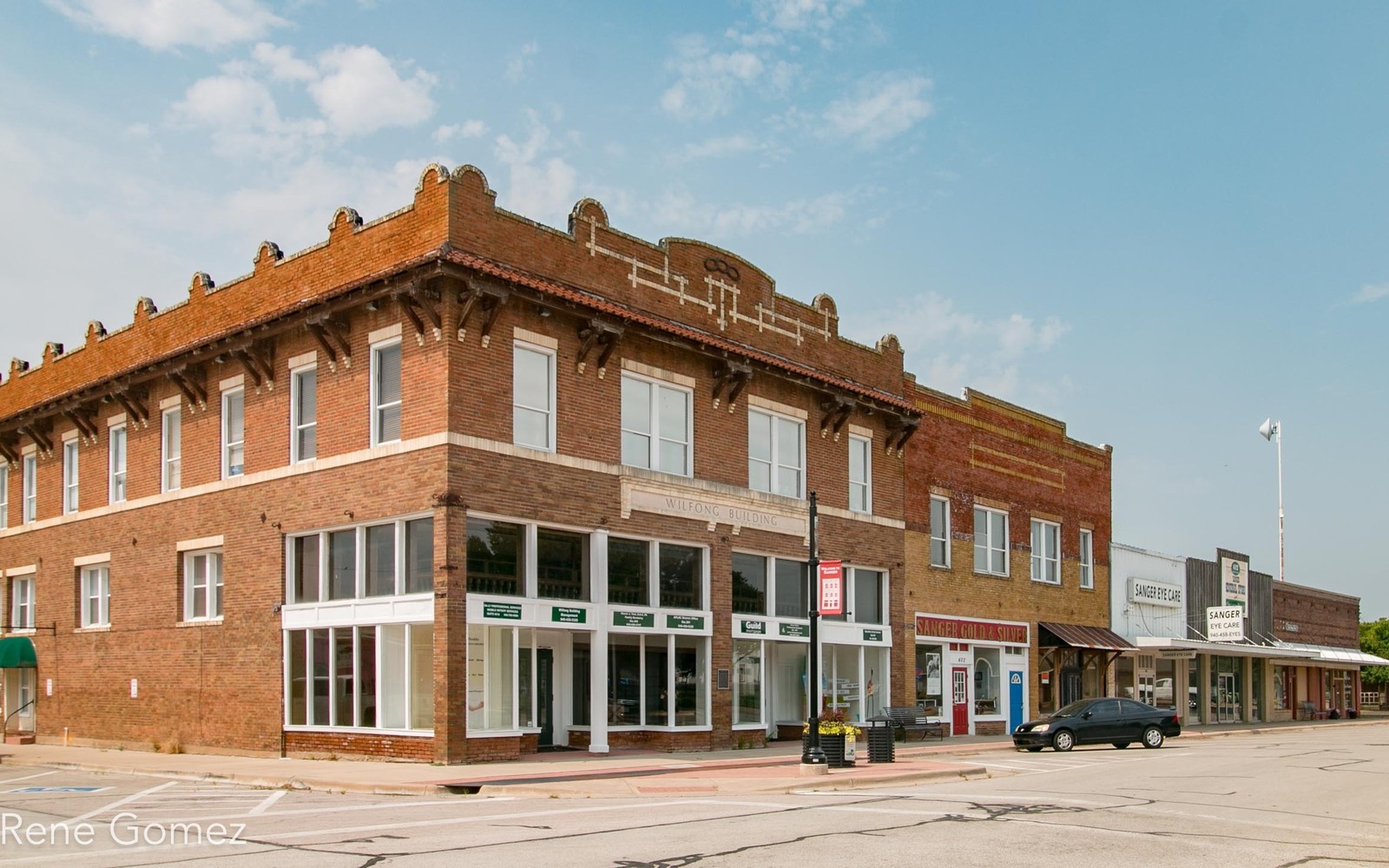
Sanger sits in Denton County, on ground where Barnett Shale drilling reached both open farmland and the city's growing residential footprint at roughly the same time.
Denton County's stretch of the Barnett Shale developed a bit later than the Tarrant County core, which means Sanger-area wells often have shorter production histories, though they still typically date back over a decade at this point. That matters for valuation — we're looking at a more mature decline curve than a newly drilled well, but not as long a history as areas drilled at the very start of the boom.
As with most of the Barnett footprint, the mineral estate around Sanger was generally reserved by the original farming and ranching families here, independent of whatever residential or commercial development has since gone in on the surface.
Denton County's later Barnett wave
Operators moved into this part of Denton County somewhat after the initial Tarrant County boom, drilling wells that are mature but not as far into decline as the earliest Barnett wells further south. We price against your specific well's actual current production rather than assuming a fixed decline stage.
Farm and ranch family reservations
Most mineral reservations here trace back to farming and ranching families who sold or subdivided surface land while keeping the minerals. We confirm that reservation and the current fraction through Denton County deed and probate records.
What we check before an offer
Current production and decline trend, confirmed net mineral acreage, and whether nearby permit activity suggests any additional development potential for your unit.
Place the county tract on the basin board
The local file should tie the county record and legal description to the relevant basin, formation, field, unit, wells, permits, and operator position. A surface address can help find the tract, but it does not establish the mineral interest or prove participation in nearby development.
Read the local well vintages
Producing wells, shut-in wells, intermittent wells, newer laterals, older vertical wells, nearby completions, and general operator acreage in the surrounding area belong in separate evidence lanes. The paid property history carries more weight than a rig or permit that does not include the subject acreage.
Reconcile the ownership line
Deeds, reservations, leases, assignments, probate or trust records, division orders, unit documents, payor records, and statements should all point to the same local interest. Acreage, fractions, burdens, depths, products, and the paid decimal stay open until the supporting records agree.
Compare the deed and closing terms
A written offer for the tract should state the exact interest conveyed, effective date, receivables, reservations, title standard, curative responsibility, adjustment rights, payment conditions, and recording sequence. A strong headline number can still carry a broad deed or a weak closing condition.
Texas Owner Questions
How old is a typical well near Sanger?
Most were drilled in the mid-to-late 2000s Barnett boom, giving them well over a decade of production history at this point.
Do you buy interests where the family reservation is unclear?
Yes, we do the deed and probate work ourselves to confirm exactly what fraction you hold before making an offer.
Is there still active development in this part of Denton County?
Most wells are mature and producing at declining volumes, with new drilling activity limited compared to the boom years.
Can you sell your interest even if your siblings want to keep theirs?
Yes, each heir's fraction is separately owned and can be sold on its own without involving the rest of the family.
What if your only record is an old check stub with a lease number?
That's enough to start. A lease number lets us pull the operator's filing and identify the well and unit tied to your interest.