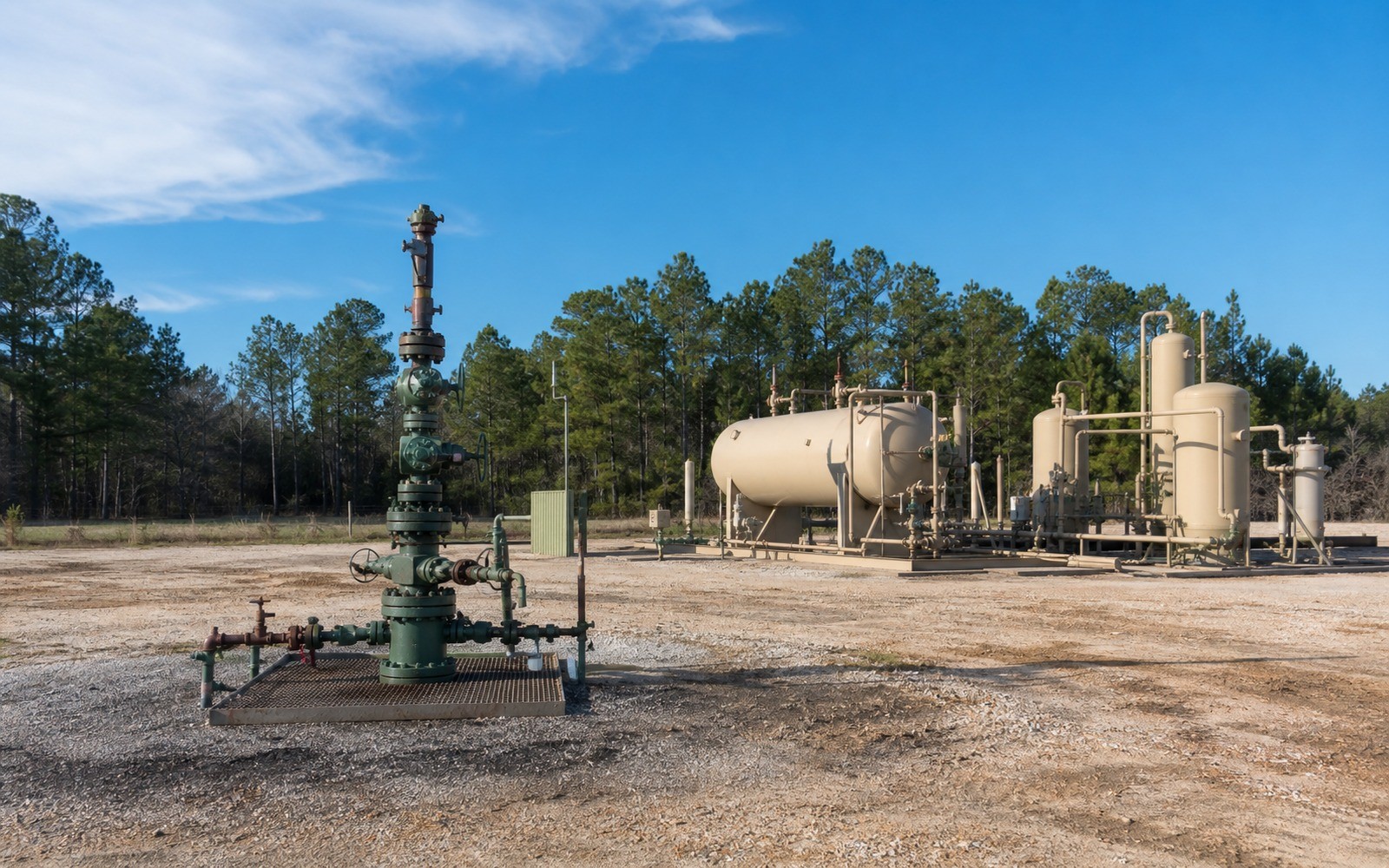
The Haynesville sits deep, runs hot, and produces more gas per well than almost any dry gas play in the country, which is exactly why it's back in demand.
East Texas Haynesville acreage, in counties like Harrison, Panola, San Augustine, and Shelby, went through a boom-and-bust cycle in the late 2000s and early 2010s tied directly to gas prices. It quieted down for a stretch, then picked back up as Gulf Coast LNG export terminals came online and needed a steady, close-by gas supply. If you own Haynesville minerals, understanding that renewed pull toward Gulf Coast demand is more useful than any generic pitch about the play being 'hot.'
This is deep, expensive rock, similar in some ways to the Delaware Basin's cost profile, which shapes which operators drill here and how they prioritize acreage.
Depth and heat make these wells expensive but productive
Haynesville wells run deep, often well past 10,000 feet, in high-pressure, high-temperature reservoir conditions. That drives up drilling and completion costs, but it also tends to produce very high initial production rates. Operators respond to that combination by concentrating on their best acreage and being selective about timing relative to gas prices, since these are not cheap wells to drill on a marginal price outlook.
That selectivity means Haynesville development can pause and restart with gas price cycles more visibly than plays with cheaper well costs, so recent activity near your tract is a better signal than long-term averages.
LNG demand changed the demand picture for East Texas gas
Gulf Coast LNG export capacity has grown substantially, and the Haynesville sits in a strong pipeline position to supply it. That's part of why operators renewed interest in the play after the lean years. If you're weighing whether to sell now or hold, it's worth knowing that this demand driver is structural, tied to long-term export contracts, rather than a short-term price spike, though gas prices themselves still swing and no future demand level is guaranteed.
Harrison, Panola, San Augustine, and Shelby: how they differ
Harrison and Panola Counties have carried a strong share of Haynesville activity historically. San Augustine and Shelby Counties, further south, have their own pockets of strong wells but can be less consistently active depending on the operator's program in a given year. Ask specifically about permits and completions in your section over the last twelve to eighteen months rather than relying on county-wide reputation, since activity in this play tends to cluster around specific operator acreage blocks.
Selling into a cyclical gas play
Because Haynesville value is tied so closely to gas price cycles and operator drilling pace, timing matters more here than in steadier oil-weighted plays. There's no way to guarantee you're selling at the top of a cycle, and anyone who claims otherwise is overselling. A grounded approach looks at your production history, nearby permit activity, and a hedged range tied to current gas pricing, not a promise about where prices are headed.
Checking whether your specific tract is in the current drilling window
Because Haynesville development moves in waves tied to price and operator budgets, a tract that saw no interest two years ago can be squarely inside an active program today, and the reverse happens too. Pulling Railroad Commission permit filings for your section over the trailing twelve to eighteen months is the clearest way to see whether your specific acreage sits inside a current push or on the edge of one that's paused.
This matters more in the Haynesville than in steadier plays, since a county-wide reputation for being 'hot' can mask real gaps between actively drilled blocks and quieter ones nearby.
Texas Owner Questions
Why did Haynesville drilling slow down and then pick back up?
Low gas prices in the mid-2010s made these expensive, deep wells less attractive. Renewed activity followed growth in Gulf Coast LNG export demand, which improved the long-term outlook for East Texas gas.
Are Haynesville wells more expensive to drill than other Texas shale plays?
Generally yes, due to depth and high-pressure, high-temperature conditions, though they can also produce at high initial rates that help offset that cost for the operator.
Does your county matter within the Haynesville play?
Yes. Harrison and Panola have historically seen heavy activity, while other counties see more variable development tied to specific operator programs, so recent local permit activity is the better guide.
Is now a good time to sell Haynesville minerals given LNG demand?
LNG demand is a genuine structural driver, but gas prices still cycle and no one can guarantee future pricing, so the decision should weigh your own liquidity needs against that uncertainty.
How do you know which operator is currently active near your Haynesville tract?
Railroad Commission permit and completion filings list the operator by lease and well name, giving you a current, verifiable answer rather than relying on whoever was active in the area years ago, since operators change hands more often than owners realize.