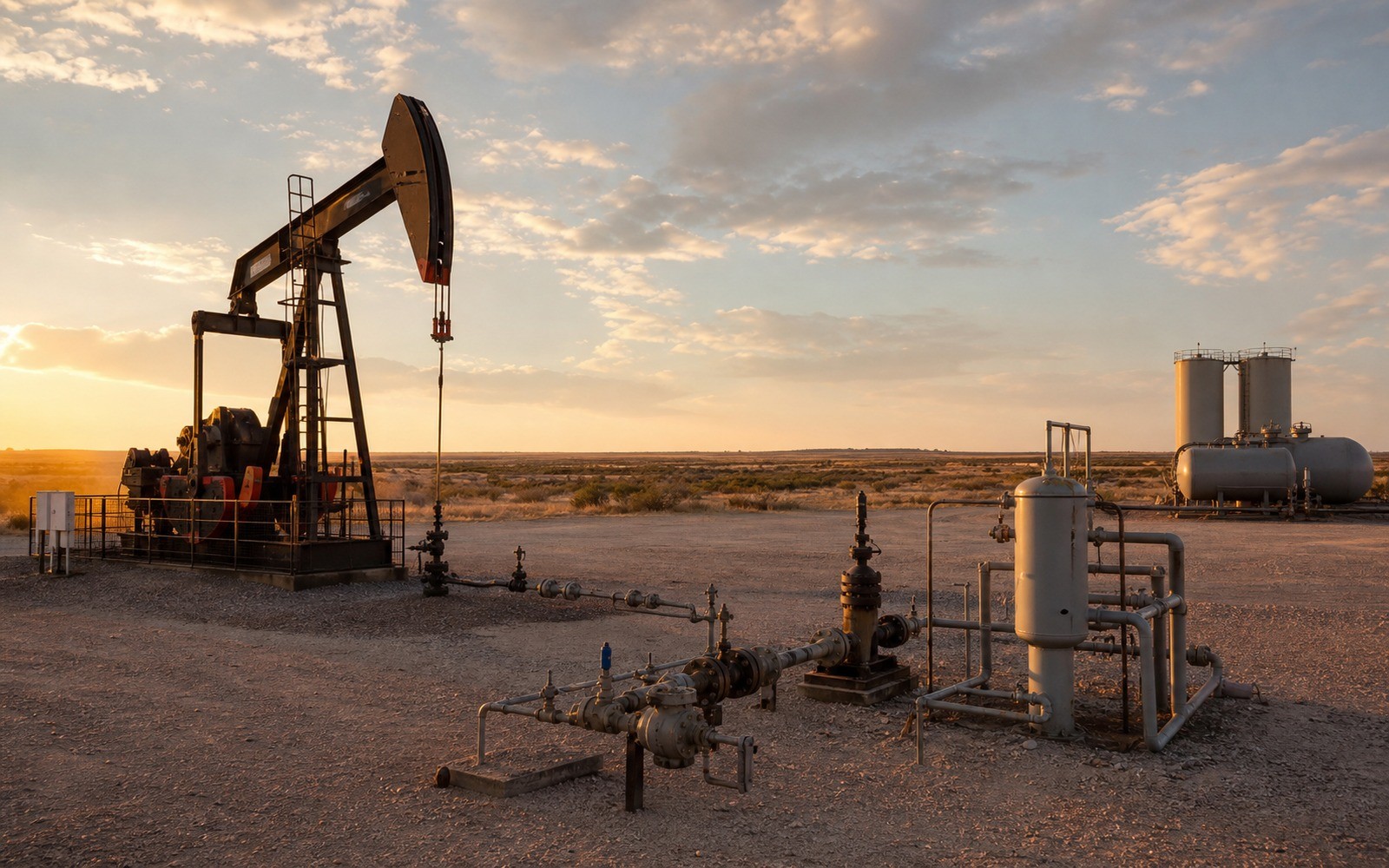
The Permian is two basins wearing one name, and that mix-up costs owners money every week.
We have pulled division orders on Permian tracts going back to when horizontal Wolfcamp wells were still a rumor at the courthouse coffee counter. The basin runs from the Midland side east of the Central Basin Platform out to the Delaware side west of it, and the two halves don't behave the same. An operator active in Martin County isn't necessarily drilling anywhere near your tract in Loving County, even though both mailers say 'Permian Basin' in the return address.
That's the first thing we check on any Permian inquiry: which sub-basin, which county, and which formation is actually being targeted underneath the acreage. Everything else follows from that.
Two basins, one zip code confusion
The Central Basin Platform splits the Permian into the Midland Basin to the east and the Delaware Basin to the west. Counties like Midland, Martin, Howard, and Glasscock sit on the Midland side, stacked with Spraberry, Wolfcamp, and Clearfork zones. Counties like Reeves, Loving, Ward, and Culberson sit on the Delaware side, where the Wolfcamp and Bone Spring run deeper and the wells cost more to drill but often come in bigger.
A buyer who tells you Permian minerals are worth a flat number per acre, without asking which county, hasn't looked at your tract. We have seen offers on Delaware acreage priced off Midland comps because the caller didn't bother to check the county line.
What the operator name on your division order tells you
Pull your most recent check stub or division order and look at the operator. Large-cap operators consolidated a lot of Permian acreage over the last several years through mergers, so the name on your statement may have changed even though the well didn't move. That name, combined with the section-township-range or abstract number, tells a landman roughly where you sit relative to current development, which is most of what drives a fair number.
If your minerals sit in a unit that's already producing, your value case is built off actual decline data and recent royalty checks. If you're undeveloped and just permitted or leased, the case is built off nearby well results and permit activity, which is a thinner, more speculative case and should be priced accordingly.
Spacing units and why your net mineral acres shrink on paper
Permian operators have moved toward tighter, stacked spacing with multiple benches drilled from single pads. Your gross mineral acres get allocated across a pooled unit, and your check reflects your fractional share of that unit's production, not your whole tract. Owners are sometimes surprised their royalty checks are smaller than they expected even on a hot well, and the answer is almost always in the unit allocation, not a bad check.
When someone runs the numbers on your interest, ask them to show the unit size and your net revenue interest inside it. If they can't produce that math, they're guessing.
Selling all, selling part, or holding a term
Permian owners don't have to sell everything. Some sell producing minerals and keep undeveloped acreage for a later well. Some sell a term interest tied to a set number of years or a set volume, then the minerals revert. Others sell an NPRI carve-out and keep the executive rights. Any of these can make sense depending on whether you want ongoing income, a lump sum now, or some mix of both.
What a courthouse file actually shows before you get an offer
Pulling your county's deed records before talking to anyone gives you a real head start: your chain of title, whether any prior severances or reservations exist, and whether your acreage sits inside a currently pooled unit. Cross-referencing that against Railroad Commission permit and completion data for your township tells you how recent the nearby activity actually is, not only whether the county as a whole has been active.
Owners who show up to a valuation conversation with this groundwork already done tend to get faster, more specific numbers, because the buyer isn't starting from scratch on research that's freely available at the courthouse.
Texas Owner Questions
Is Delaware Basin acreage always worth more than Midland Basin acreage?
Not always. It depends on current activity, depth, and formation results in your specific county, not which side of the platform you're on. Both sides have core and flank acreage.
How do you find out which formation is under your Permian minerals?
The county clerk's records, along with Texas Railroad Commission well records for offset wells, will show you the target formation on nearby permits and completions.
Your Permian minerals haven't produced in years. Are they still worth anything?
Often yes, especially in active counties, because undeveloped acreage in a hot play carries speculative value tied to future drilling, not only current income.
Do you need a lawyer to sell Permian mineral rights?
A title attorney or landman review of your deed and any prior conveyances is worth the cost before you sign, especially on older Permian tracts with a long chain of title.