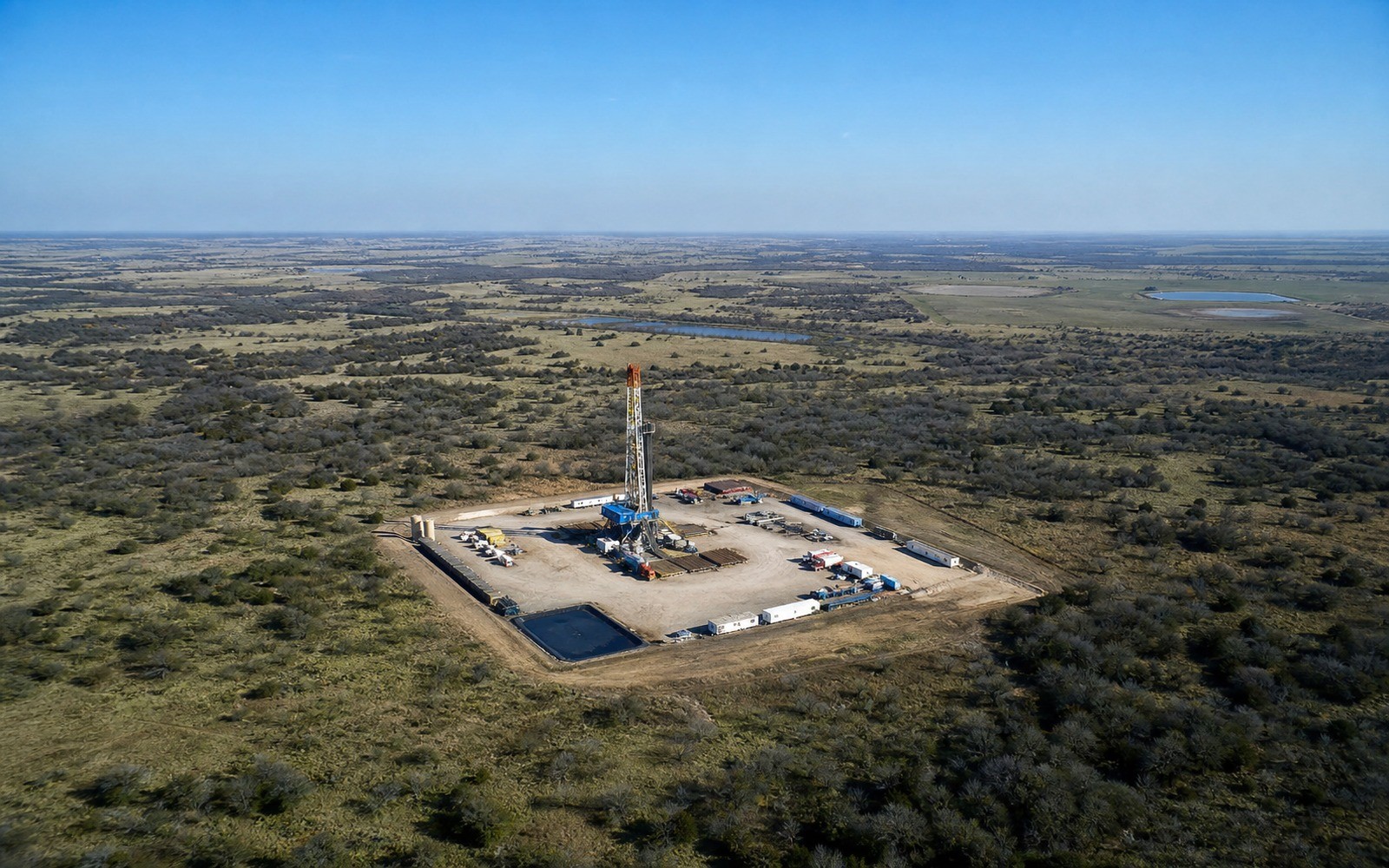
The Barnett was the play that started the shale boom, and today it's the most mature gas field in Texas, which is its own kind of opportunity if you own minerals under it.
We have worked Barnett files that go back to before anyone called it a 'shale revolution,' when operators were still figuring out how to frac horizontal wells economically. Twenty-plus years later, the Barnett sits mostly in and around the Fort Worth metro, spread across Tarrant, Denton, Johnson, Wise, and Parker Counties. It's almost entirely dry gas, which puts its value on a different track than the oil-weighted plays further west and south.
Barnett minerals tend to have long, stable production histories, and that's the biggest asset an owner here has for getting a fair number.
Urban drilling rules changed development here
Because a big chunk of the Barnett sits under Fort Worth and its suburbs, drilling has been driven by city ordinances on setbacks, noise, and well pad locations in a way that rural plays never had to deal with. That's slowed new drilling in some areas and effectively capped how many additional wells will ever go in near certain tracts. If your minerals are inside city limits or a tight suburban footprint, understand that upside from new wells may be limited compared to a rural county, and your value case should lean more on existing production than future drilling.
Wise and Parker Counties, more rural than the Tarrant County core, have had more room for continued activity.
Gas price sensitivity is the whole ballgame
Because Barnett production is almost entirely natural gas, your royalty checks move with gas prices more directly than with oil prices. Gas has been more volatile than oil over the past several years, and that volatility should be reflected as a hedged range in any valuation, not a single confident number. Anyone quoting you a firm price without asking about your gas price assumptions is skipping the most important variable in a Barnett deal.
Decline curves that have already flattened out
Barnett wells are old enough now that most have moved well past their steep early decline and into a long, flatter production tail. That's actually useful for valuation purposes, because a flatter decline is more predictable than a young well still dropping fast. Pull two or three years of your division order statements and you'll likely see a fairly stable pattern, which a buyer can price with more confidence than a speculative new-play tract.
Old leases, held-by-production questions
Because so much Barnett acreage was leased in the early-to-mid 2000s, held-by-production status is a real question on some tracts, particularly where wells have been shut in or produced only marginally in recent years. If a well near you has gone quiet, it's worth checking whether the lease is still valid or has lapsed, since that affects whether you're selling a producing interest or an unencumbered mineral estate waiting on a new lease.
What a buyer should be able to show you on a Barnett tract
A grounded Barnett valuation should walk through your well's production history month by month, its current decline rate compared with a typical Barnett flattened tail, your net revenue interest under the lease, and any known lease status questions on the specific tract. If a caller can't produce that level of detail and instead offers a flat number tied only to acreage, they haven't actually looked at your well.
Bring whatever statements you have, even a partial history helps, and ask directly whether the number being offered reflects your specific well or a county-wide average. The two can differ substantially on a mature field like this one.
Texas Owner Questions
Is the Barnett Shale still producing gas today?
Yes, though at a mature, flatter decline rate than during its peak development years. Many original wells are still on production, particularly in Tarrant, Denton, and Wise Counties.
Why do city drilling rules matter for your mineral value?
Setback and permitting rules in urban parts of the Barnett can limit where new wells can be drilled, which affects the realistic upside from future development on tracts inside city or suburban footprints.
Your Barnett well hasn't produced much lately. Are your minerals worthless?
Not necessarily. Check whether the lease is still held by production and look at cumulative history; a marginal current rate doesn't erase the value of a long-producing interest, though it does lower it.
Does gas price volatility affect what you should ask for your minerals?
It should factor into any valuation as a hedged range rather than a fixed number, since Barnett value is closely tied to natural gas pricing that moves independently of oil.
Are there still new Barnett wells being drilled today?
New drilling has slowed substantially compared with the play's peak years, with most current activity concentrated in workovers and continued production from existing wells rather than large-scale new completions across the field, though pockets of renewed interest do surface from time to time.