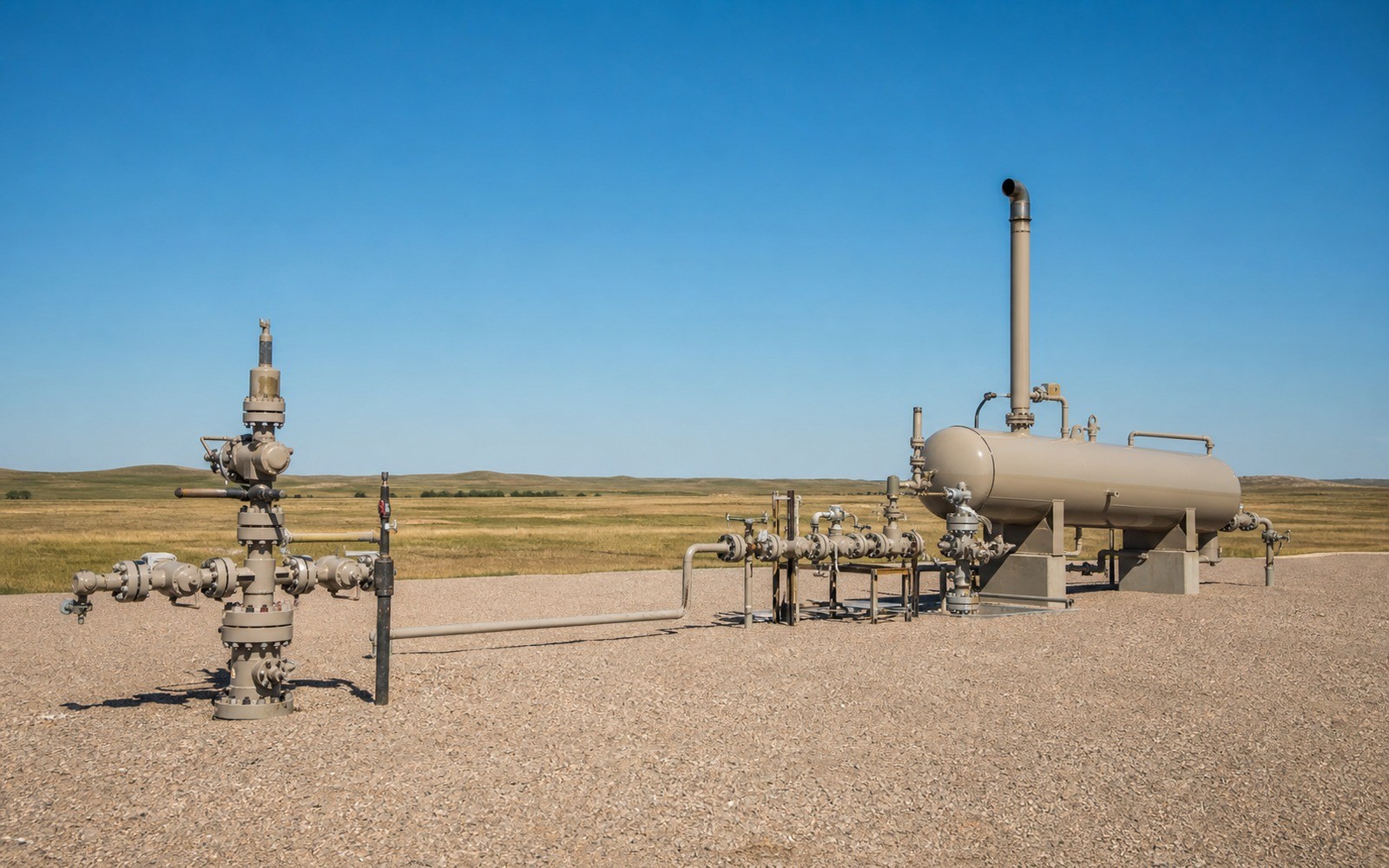
Darrouzett sits up in the Texas Panhandle, wheat and cattle country where the Anadarko Basin's Granite Wash formation has quietly supported gas production for decades.
Lipscomb County is about as far as you can get from the Eagle Ford or the Permian while still being in Texas, tucked into the northeastern corner of the Panhandle where the Anadarko Basin extends south out of Oklahoma. Development here has always run on a different rhythm than the state's more famous plays, older, steadier, and less prone to the boom-bust cycles seen further south.
Granite Wash Production in the Panhandle
The Granite Wash formation produces both gas and condensate through this part of the Anadarko Basin, and wells here often have long, well-established production histories, some going back decades through both conventional and later horizontal development. That long track record gives us solid ground to work from when pricing an interest.
Wheat and Cattle Country, Same as Always
The surface around Darrouzett has stayed largely agricultural throughout the decades of gas development below it, worked for wheat and cattle by families who've often held both the surface and the minerals since well before any drilling started. That continuity tends to make title research more straightforward than in areas with more turnover.
Confirming Ownership Through Lipscomb County
We pull deed and probate records from the Lipscomb County Clerk to confirm your exact interest, working with whatever documentation your family has kept, whether that's a recent division order or an older lease from decades back.
Place the county tract on the basin board
The local file should tie the county record and legal description to the relevant basin, formation, field, unit, wells, permits, and operator position. A surface address can help find the tract, but it does not establish the mineral interest or prove participation in nearby development.
Read the local well vintages
Producing wells, shut-in wells, intermittent wells, newer laterals, older vertical wells, nearby completions, and general operator acreage in the surrounding area belong in separate evidence lanes. The paid property history carries more weight than a rig or permit that does not include the subject acreage.
Reconcile the ownership line
Deeds, reservations, leases, assignments, probate or trust records, division orders, unit documents, payor records, and statements should all point to the same local interest. Acreage, fractions, burdens, depths, products, and the paid decimal stay open until the supporting records agree.
Compare the deed and closing terms
A written offer for the tract should state the exact interest conveyed, effective date, receivables, reservations, title standard, curative responsibility, adjustment rights, payment conditions, and recording sequence. A strong headline number can still carry a broad deed or a weak closing condition.
Texas Owner Questions
Is Panhandle gas production as active today as it used to be?
It varies. Some Granite Wash wells here have produced steadily for decades, while newer development pace depends on current operator activity. We check your specific tract's status before quoting.
Your family has farmed this land near Darrouzett for generations. Does that make title easier to confirm?
Often, yes. Long, uninterrupted family ownership tends to mean a cleaner, more traceable chain of title than land that's changed hands repeatedly.
How is Granite Wash production different from shale plays further south?
It's an older, more conventional-style play in many respects, often with steadier, longer-established production histories rather than the sharp early decline typical of newer shale wells.
How long does it usually take to close on a Panhandle interest like this?
Once title is confirmed, most straightforward closings take a few weeks, largely dependent on how quickly county records and any needed probate documentation come together.