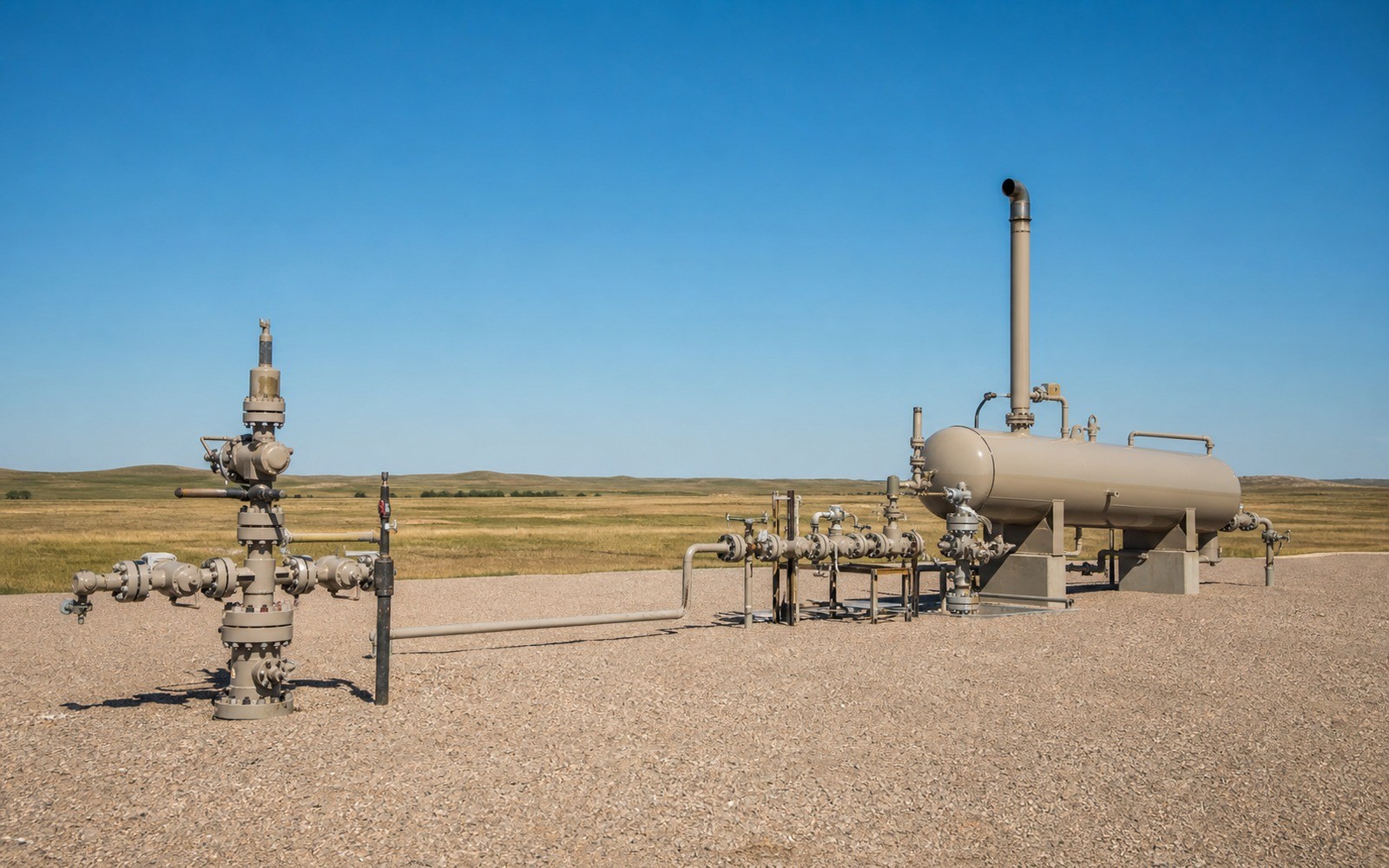
Goldsmith has been an oil town since the 1930s, named for one of the older fields in Ector County, and it's still sitting on active Permian production today.
The Goldsmith field is old enough that mineral ownership here often traces through several generations of family transfers, sometimes with minerals split off from surface land decades before anyone in the family had heard of a horizontal well. Between the legacy vertical production and newer unconventional development nearby, this is layered ground with a long paper trail.
Goldsmith is a small unincorporated community these days, more oilfield than town, and most of the current activity you'd notice driving through is pumpjacks and service trucks rather than storefronts.
A long production history means a longer title chain
Ninety years of transfers, leases, and probates leave a real paper trail at the Ector County Clerk's office. That's actually useful, a long, well-documented chain is often easier to confirm than a newer, thinner one, even if it takes a bit more time to pull every document.
Legacy wells and today's decline
Some Goldsmith wells have been producing for generations at low, steady volumes, the kind of stripper production that isn't dramatic but has stayed remarkably consistent. Others are newer horizontal wells with a sharper decline curve. We evaluate whatever specific wells are tied to your interest rather than assuming one pattern fits all.
What we need to get started
A recent division order or royalty statement is the fastest way in. If your family's paperwork is old or incomplete, we can often reconstruct the chain from county records ourselves before we come back to you with a number.
Place the county tract on the basin board
The local file should tie the county record and legal description to the relevant basin, formation, field, unit, wells, permits, and operator position. A surface address can help find the tract, but it does not establish the mineral interest or prove participation in nearby development.
Read the local well vintages
Producing wells, shut-in wells, intermittent wells, newer laterals, older vertical wells, nearby completions, and general operator acreage in the surrounding area belong in separate evidence lanes. The paid property history carries more weight than a rig or permit that does not include the subject acreage.
Reconcile the ownership line
Deeds, reservations, leases, assignments, probate or trust records, division orders, unit documents, payor records, and statements should all point to the same local interest. Acreage, fractions, burdens, depths, products, and the paid decimal stay open until the supporting records agree.
Compare the deed and closing terms
A written offer for the tract should state the exact interest conveyed, effective date, receivables, reservations, title standard, curative responsibility, adjustment rights, payment conditions, and recording sequence. A strong headline number can still carry a broad deed or a weak closing condition.
Texas Owner Questions
Your family has held this interest since before you was born. Is old paperwork a problem?
Not usually. A long-documented chain at the Ector County Clerk's office is often straightforward to confirm, even with older deeds and probates involved.
Is a stripper well interest worth selling?
It can be, depending on remaining reserves and current pricing. Long-producing, low-volume wells still carry real value, priced against their specific production history.
What if you have lost your original documents?
We can usually pull deed and transfer records directly from the county, so missing paperwork on your end doesn't stop the process.
Will your offer reflect nearby newer horizontal wells too?
If a horizontal well produces from your specific mineral interest, yes, we include it. We check for all applicable wellbores before quoting.