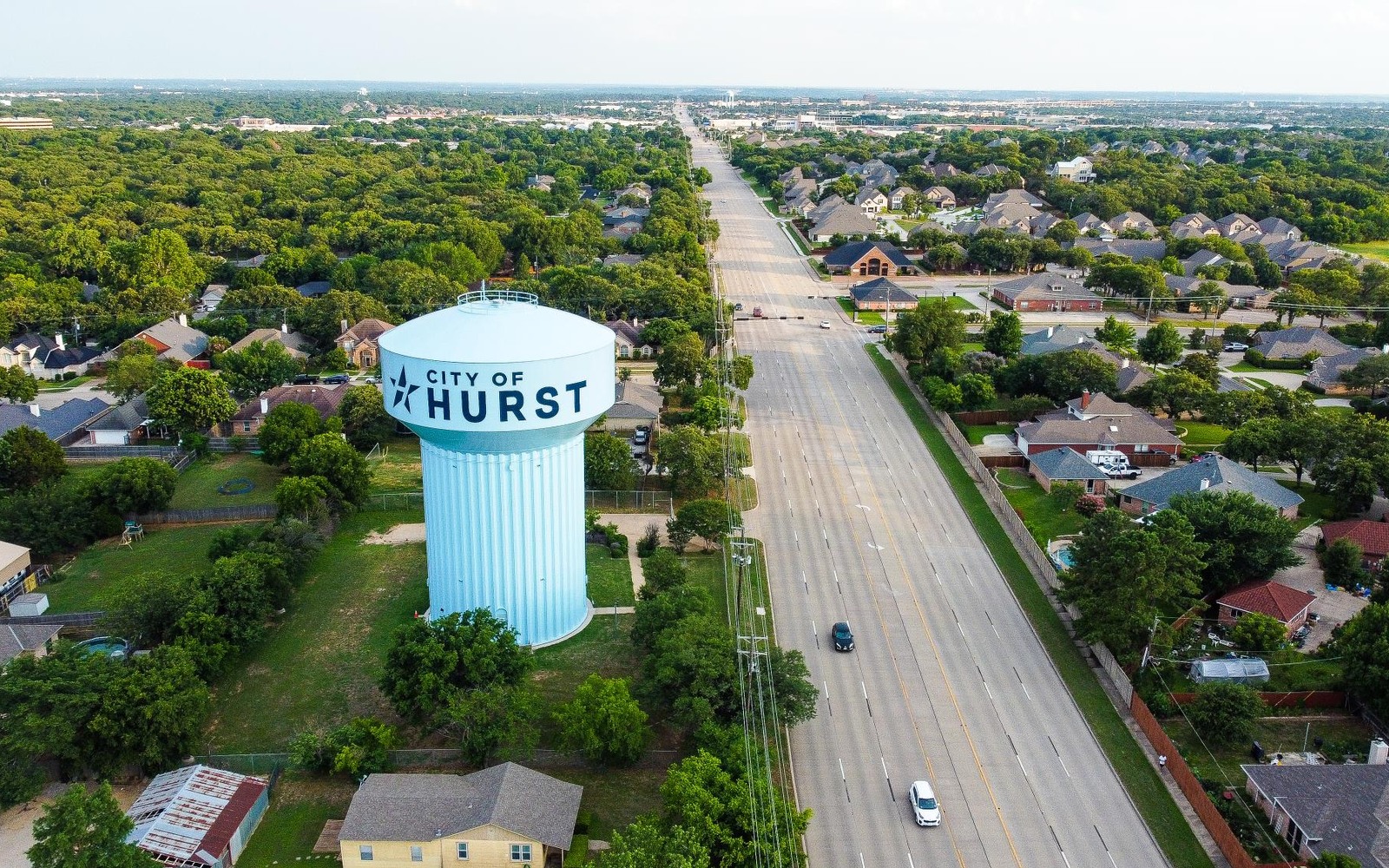
Hurst is dense Mid-Cities territory, and the mineral interests here tend to be small, old, and easy to forget about between royalty checks.
Operators drilled Barnett horizontals through this stretch of Tarrant County in the mid-2000s, threading laterals under existing neighborhoods from pad sites on the edges of town. Most owners we talk to in Hurst inherited their interest and have never seen the well or dealt directly with the operator beyond opening a statement a few times a year.
Being wedged between Fort Worth and Bedford in the Mid-Cities corridor, Hurst was already densely built out by the time the Barnett wells went in, so operators here worked with tighter surface constraints than in less developed parts of the county.
Why the checks got smaller
Barnett gas wells decline hard early and then taper into a long, low tail. If your Hurst royalty has dropped to a fraction of what it once paid, that's the well aging, not a red flag. What we look at is the current rate of decline and how many years of production are realistically left, which is what actually sets value now.
Confirming what you actually own
A lot of Hurst deeds are decades old and reference legal descriptions that predate the current street grid. We match your deed to the Railroad Commission's pooled unit and Tarrant County Clerk records so the offer is based on your real net mineral acreage, not an assumption.
Selling an inherited interest
If the interest came to you through a will or by heirship, we work from whatever probate or affidavit documentation exists. Many Hurst owners hold interests split among several siblings or cousins, and we can buy your specific share without requiring the whole family to sell together.
Place the county tract on the basin board
The local file should tie the county record and legal description to the relevant basin, formation, field, unit, wells, permits, and operator position. A surface address can help find the tract, but it does not establish the mineral interest or prove participation in nearby development.
Read the local well vintages
Producing wells, shut-in wells, intermittent wells, newer laterals, older vertical wells, nearby completions, and general operator acreage in the surrounding area belong in separate evidence lanes. The paid property history carries more weight than a rig or permit that does not include the subject acreage.
Reconcile the ownership line
Deeds, reservations, leases, assignments, probate or trust records, division orders, unit documents, payor records, and statements should all point to the same local interest. Acreage, fractions, burdens, depths, products, and the paid decimal stay open until the supporting records agree.
Compare the deed and closing terms
A written offer for the tract should state the exact interest conveyed, effective date, receivables, reservations, title standard, curative responsibility, adjustment rights, payment conditions, and recording sequence. A strong headline number can still carry a broad deed or a weak closing condition.
Texas Owner Questions
Can you sell just your share if your siblings also inherited part of the interest?
Yes. Each heir's fractional share is a separate piece of property, and you can sell yours independently of what your siblings decide to do.
Do you buy interests that are currently leased but not producing?
Yes, we evaluate leased but non-producing interests too, though the offer reflects the uncertainty of future development rather than current cash flow.
How do you determine the well's remaining life?
We pull production history filed with the Railroad Commission and model the decline curve against current pricing to estimate what's realistically left to produce.
Is a Hurst interest harder to evaluate because of how dense the neighborhood is?
No, density on the surface doesn't complicate the mineral evaluation. We work from your deed and the unit filing regardless of what's built above.