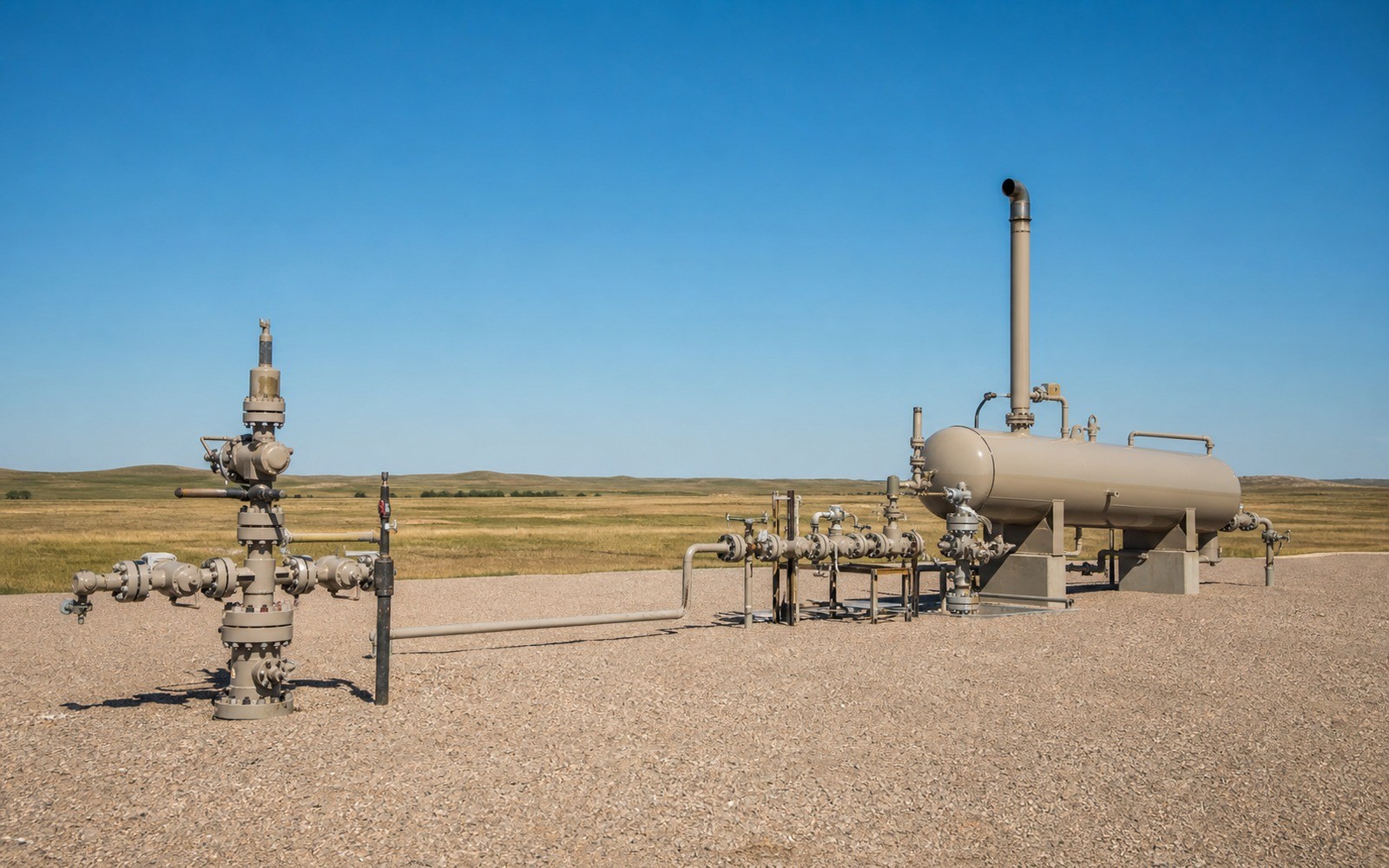
The Stanton courthouse in Martin County has stamped more oil and gas paperwork per square mile than almost any county seat in Texas, and the reason is under everybody's feet.
Martin County sits dead center in the Midland Basin. Operators have been landing laterals in the Wolfcamp and Spraberry benches here for over a decade, and most sections in the county carry some combination of active production, permitted locations, or held-by-production leases stacked three and four zones deep.
If you own minerals here, chances are the interest came down through family land, a ranch split among heirs, or a deed your grandfather signed decades before anyone was drilling horizontal. Whatever the history, the question owners bring to the table is usually the same: is it time to cash out, or keep waiting on royalty checks that swing with the oil price.
The Wolfcamp Stack Under Martin County
The Wolfcamp here isn't one zone, it's four or five, commonly labeled A through D bench, plus the Jo Mill and Middle Spraberry above it. Operators drill multi-well pads targeting different benches from the same surface location, which means a single section can carry several distinct spacing units and several distinct royalty streams tied to your same mineral acreage.
That stacking is good for production longevity but it complicates valuation. A buyer looking at your interest has to figure out not only what's producing today but what's permitted, what's held by a nearby unit, and what benches are still untouched under your specific tract.
What Your Deed Actually Says
Martin County mineral history goes back to ranch-era deeds that often reserved minerals when the surface sold, or split them among children unevenly. Before anyone can put a number on your interest, we pull the deed records at the courthouse in Stanton and trace the chain, because what you think you own and what the record shows aren't always the same fraction.
Some owners hold a mineral fee interest, others hold a non-participating royalty interest carved out of someone else's mineral fee, and the two are valued differently and pay differently. If you're not sure which you have, that's normal. It's a courthouse question, not a guessing question.
Heirship and Fractional Interests
A lot of Martin County minerals moved through families without a formal probate, which leaves title split into small fractional shares among cousins, aunts, and people who've never met each other. An operator won't send a division order, let alone a check, until title is cleared enough to know exactly who gets paid what.
If that's your situation, you're not alone, and it's not a dead end. We routinely work through heirship chains, affidavits of heirship, and small estate paperwork to get an interest sale-ready even when the title is messy going in.
When Selling Beats Waiting on the Check
A producing well in the Midland Basin declines fast in year one and two, then settles into a long, shallow tail. If your royalty is already well into that tail, the value locked in a sale today can be worth more than years of a shrinking monthly check, especially with no offset well permitted nearby to refresh production.
On the flip side, if there's an active permit or a rig running near your tract, that changes the math entirely, and that's exactly the kind of detail we check against county permit filings before we ever quote a number. We don't promise a price up front. We look at your specific acreage, the wells around it, and recent activity, then tell you what it's worth in this market.
Texas Owner Questions
How do you know what county records show for your Martin County minerals?
We pull the deed and probate chain at the Martin County Clerk's office in Stanton as part of our review. You don't need to drive out there or order the copies yourself, we handle that once you send us your existing paperwork or a description of the tract.
Does it matter which Wolfcamp bench is producing under your acreage?
Yes. A tract with production or permits across multiple benches typically carries more long-term value than one with a single zone tapped. We check permit and completion records for your specific section before quoting.
You inherited a small fractional interest and don't have a formal deed in your name. Can you still buy it?
In most cases, yes. We work through affidavits of heirship and other title curative steps regularly. Bring us what you have, even an old royalty statement or a relative's name, and we'll trace it from there.
Will selling your minerals affect the surface land if your family still owns it?
No. Mineral and surface are separate estates under Texas law. Selling your mineral interest doesn't transfer or encumber any surface acreage your family holds.
What's the difference between selling your minerals and selling just the royalty?
Selling minerals conveys the full mineral fee, including future leasing bonus and executive rights. Selling only royalty conveys the right to production income but keeps the leasing rights with you. Which fits depends on your deed and your goals, and we'll walk through both.