Rusk County was at the heart of the 1930 East Texas Field discovery, and nearly a century later its subsurface is still producing from both that legacy field and the deeper Haynesville and Cotton Valley formations.
When the Daisy Bradford No. 3 blew in near Turnertown in October 1930, it kicked off the discovery of the largest oil field in the Lower 48 at the time, and Rusk County sat right in the middle of it. That original East Texas Field production reshaped the county's economy and its courthouse records both, since the boom generated an enormous volume of leases, deeds, and probate filings that mineral title research still runs through today.
Below that shallow legacy pay, operators have also developed the deeper Haynesville and Cotton Valley formations across parts of the county in more recent years. That means a Rusk County mineral tract can carry two distinct production stories at two very different depths, sometimes under completely separate leases written decades apart.
Nearly a century of continuous production records
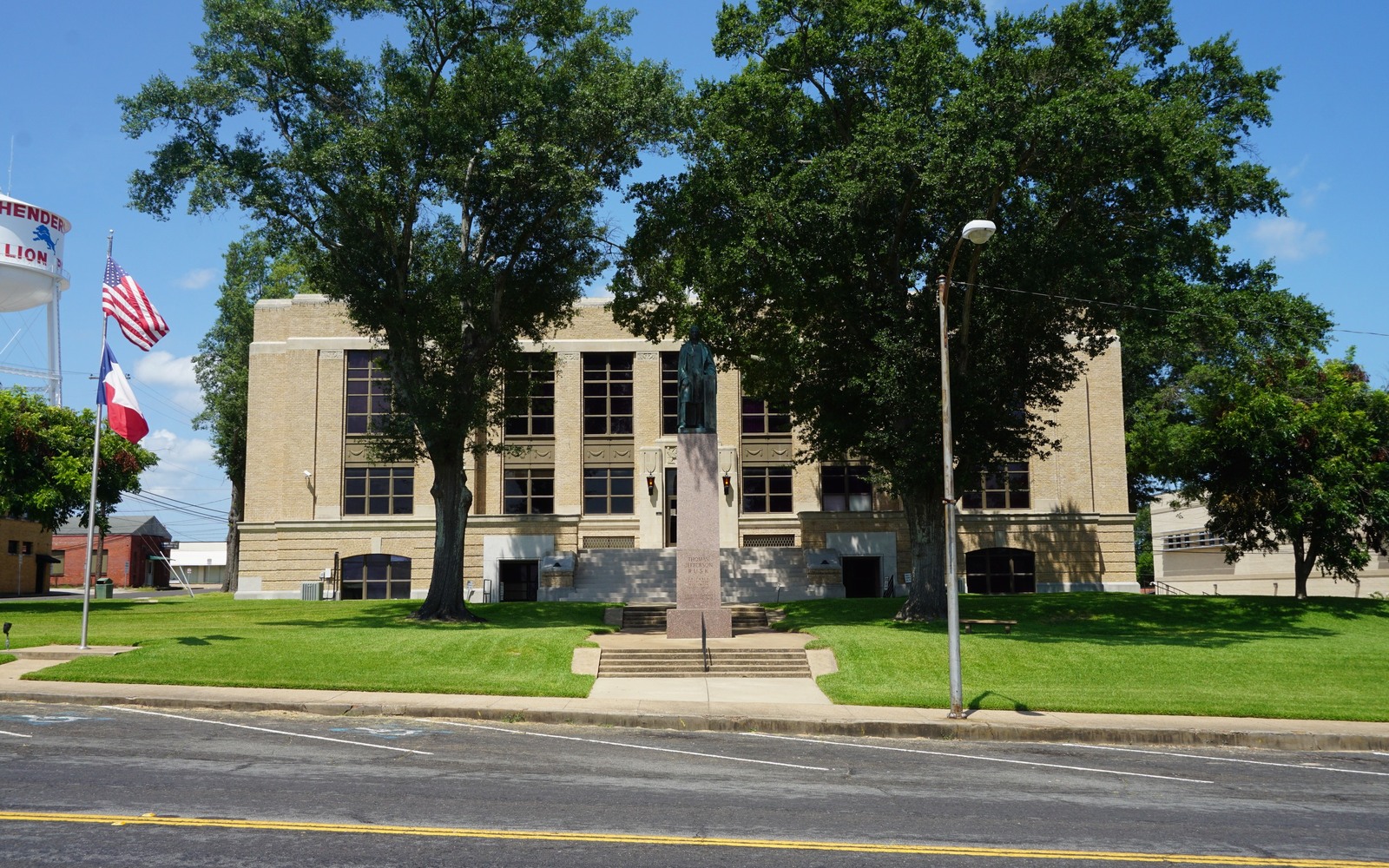
Rusk County's oil and gas records go back further and run deeper than almost any other county in Texas. That's an advantage for title work — there's an unusually complete paper trail — but it also means a mineral estate can have changed hands, been probated, and been re-leased many times since the 1930s. We trace the full chain at the Rusk County Courthouse in Henderson rather than assuming a recent lease tells the whole story.
Because the original field was drilled on tight vertical spacing across thousands of individual leases, many mineral tracts here were also unitized decades ago under old field-wide unitization orders. We check whether your tract falls under one of those legacy units, since that affects how royalty is calculated even today.
Shallow legacy oil, deeper Haynesville gas
A lease written for the shallow East Texas Field sand generally doesn't cover the same depths or terms as a modern Haynesville lease at 10,000 feet or more. We check whether your tract has separate leases by depth, since your interest could be producing shallow oil, deeper gas, both, or neither at any given time.
Heirship after nearly a century
A mineral estate that was one signature in 1931 can be well over a hundred heirs deep by now if it's never been consolidated. It's common for us to find current owners holding interests smaller than a hundredth of a net mineral acre, split among cousins across several states. We buy those small fractions individually after confirming the chain.
What determines value here
Current production by formation and depth, whether your tract sits in a legacy unitized field or a newer horizontal unit, and your confirmed net mineral acreage from the full deed and probate chain.
Towns across the county, different production profiles
Henderson, Tatum, Overton, Mount Enterprise, and the smaller communities scattered across Rusk County each sit over slightly different parts of the field's history. Some areas saw the heaviest early-1930s vertical drilling and have been in decline for decades; others saw more of the recent Haynesville leasing wave. We don't price a countywide average — we look at the specific township and range your tract sits in and match it against nearby wells.
Owners sometimes assume that because a relative's interest near one town paid well, their own tract elsewhere in the county should match. Production varies block by block here more than in almost any other Texas county, simply because of how much drilling has occurred across nearly a hundred years.
Texas Owner Questions
Is your interest connected to the original East Texas Field discovery?
Possibly, depending on where your tract sits. We check historical field maps and unitization records against your legal description to confirm.
Your royalty check is tiny, just a few dollars. Is it worth selling?
Small legacy interests are common after this many decades of division. Many owners still prefer to sell rather than manage an interest that generates minimal income, and we buy fractions of this size regularly.
How do you know if your tract has Haynesville potential beneath the legacy oil?
We check permit and lease activity by depth in your specific area, since not every legacy tract has seen deeper leasing or drilling.
What if there's no clear record of who inherited the interest after several generations?
We can often work with a title company to resolve gaps in an old probate chain as part of the closing process.
Does it matter which town in Rusk County your interest is near?
Yes. Production history varies significantly across the county depending on which part of the legacy field or Haynesville trend your tract falls in, so we evaluate each tract on its own location, not a countywide figure.
Do you buy interests where the mineral estate has been split among out-of-state heirs?
Yes, that's common after this many decades. We can typically work with each heir separately, wherever they're located, to confirm and purchase their individual fraction.