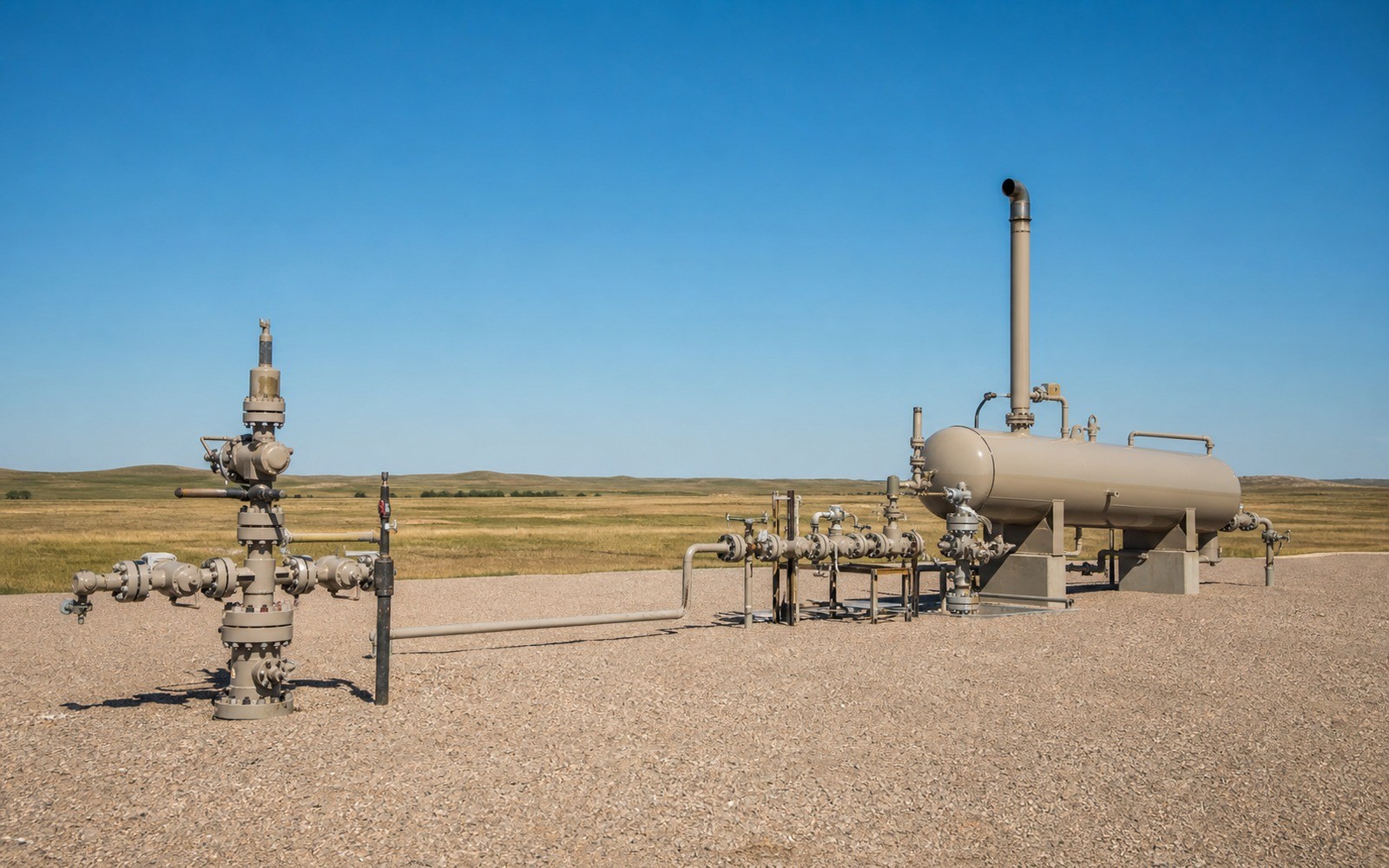
Tatum sits in Panola County, one of the deepest, hottest corners of the Haynesville play on the Texas side of the state line, and that depth is exactly why the wells here cost more and pay differently than shallower gas plays.
Panola County has old conventional gas history layered under the modern Haynesville and Cotton Valley development, and Tatum has seen its share of both. Comstock Resources and Aethon Energy have been among the more active operators working this corner of East Texas over the past decade plus.
If you're holding a royalty interest or unleased minerals near Tatum, send us your deed or a recent statement and we will give you a number grounded in what's actually producing on your unit, not a generic Haynesville average.
Deep, high-pressure gas changes the math
Haynesville wells around Tatum run well over 10,000 feet, which means high drilling costs and high initial production, but also a steeper relationship between gas prices and whether an operator keeps drilling. When Henry Hub prices are strong, Panola County sees active permitting. When they soften, rigs move elsewhere and existing wells simply produce out their decline. That price sensitivity is worth understanding before you compare an offer against what a neighbor's check looked like two years ago.
What we check before quoting Tatum acreage
We pull your unit's current operator and recent production from Railroad Commission records, then cross-reference against the Panola County Clerk's deed index in Carthage to confirm title. East Texas tracts here often passed through a family for generations with timber or farmland on the surface and minerals held separately, so we also check whether the mineral estate was ever formally severed or whether it's still tied to the original land patent.
Place the county tract on the basin board
The local file should tie the county record and legal description to the relevant basin, formation, field, unit, wells, permits, and operator position. A surface address can help find the tract, but it does not establish the mineral interest or prove participation in nearby development.
Read the local well vintages
Producing wells, shut-in wells, intermittent wells, newer laterals, older vertical wells, nearby completions, and general operator acreage in the surrounding area belong in separate evidence lanes. The paid property history carries more weight than a rig or permit that does not include the subject acreage.
Reconcile the ownership line
Deeds, reservations, leases, assignments, probate or trust records, division orders, unit documents, payor records, and statements should all point to the same local interest. Acreage, fractions, burdens, depths, products, and the paid decimal stay open until the supporting records agree.
Compare the deed and closing terms
A written offer for the tract should state the exact interest conveyed, effective date, receivables, reservations, title standard, curative responsibility, adjustment rights, payment conditions, and recording sequence. A strong headline number can still carry a broad deed or a weak closing condition.
Texas Owner Questions
Why did your royalty check from a Tatum well drop so much recently?
Haynesville wells decline fast in the first couple years, and payments also move with natural gas prices, which have swung significantly. A drop doesn't necessarily mean anything's wrong, it's often a combination of normal decline and a softer gas market.
Is your small family tract near Tatum worth selling if it's never been drilled?
Possibly, depending on how close it sits to active Haynesville units. Unleased minerals in an area with nearby drilling can carry real value even before a well is on your specific tract.
Do you need to be local to Panola County to sell?
No. Most of the owners we work with in this area live elsewhere. We handle the title work and closing through a title company, and you can sign remotely.