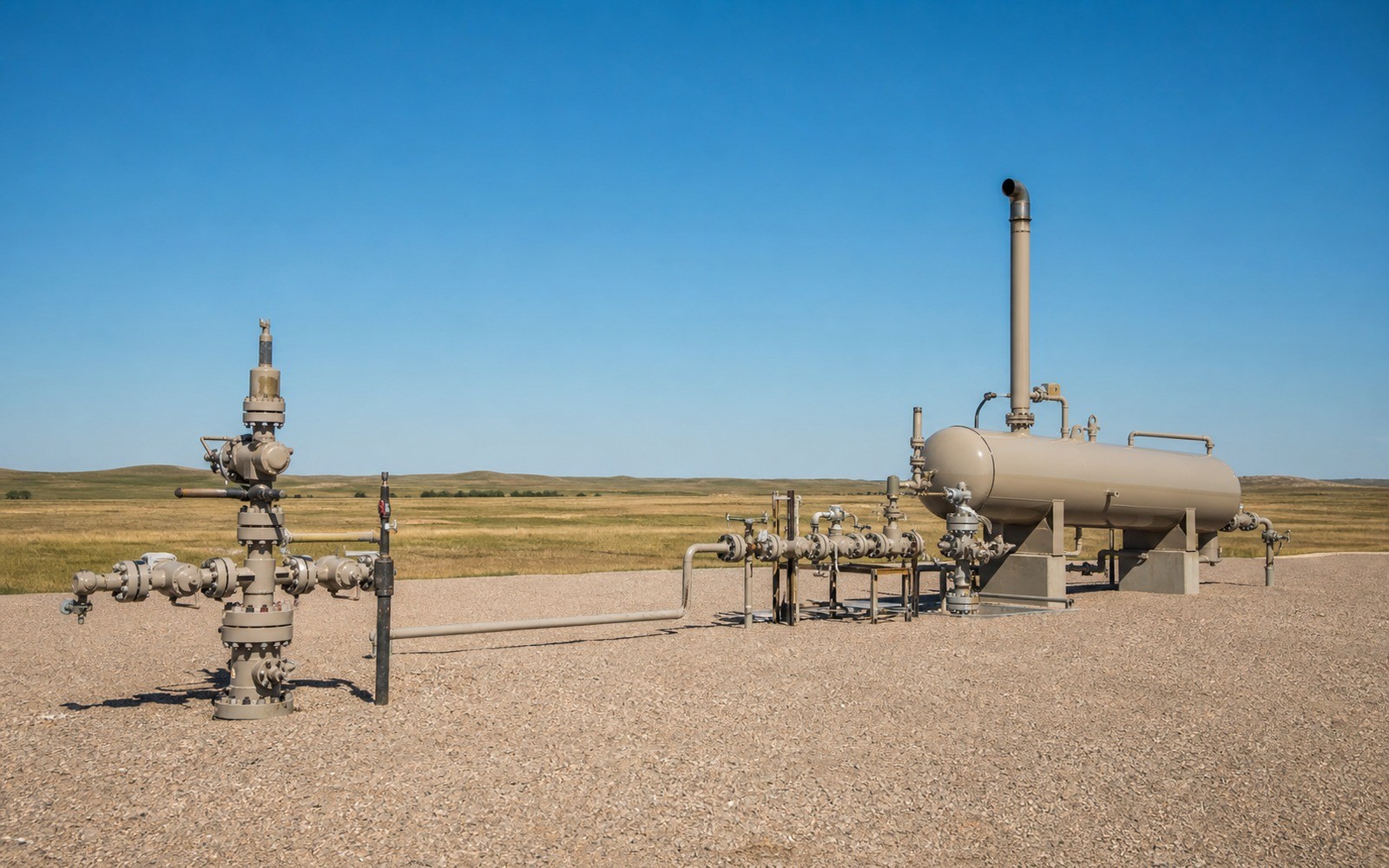
River Oaks sits along the West Fork of the Trinity River in Tarrant County, a small, built-out city where Barnett Shale gas was leased and pooled decades after the surface was already developed.
By the time Barnett Shale drilling reached this stretch of the Trinity River corridor, River Oaks was already a fully developed small city, not open ranchland. That timing matters for title work: mineral reservations here almost always predate the shale boom itself, going back to whenever the land was first subdivided, and ownership has typically split through a couple of generations of inheritance since.
With little open land left for new pad sites, wells serving this area were drilled from a limited number of locations and pooled to reach under the built-out residential tracts nearby. If you hold a mineral interest in River Oaks, it's almost certainly part of a pooled unit rather than tied to a well on your own block.
Limited pad sites, wide pooled units
Because so little vacant land remained here when drilling arrived, operators had to work with a small number of available sites and extend horizontal laterals to cover the surrounding tracts. We confirm your specific pooled unit and calculated share through Railroad Commission filings before pricing your interest.
Older reservations, established title
Most River Oaks mineral reservations date to mid-century subdivision deeds, well before shale drilling was even a possibility. That gives us a clear starting point in the Tarrant County Clerk's records, and we trace forward from there through any probate or transfer to your current ownership.
What sellers usually have on hand
A division order statement is the most common document we see from River Oaks owners. That alone is enough to identify your operator, well, and unit, and start confirming your fraction.
Place the county tract on the basin board
The local file should tie the county record and legal description to the relevant basin, formation, field, unit, wells, permits, and operator position. A surface address can help find the tract, but it does not establish the mineral interest or prove participation in nearby development.
Read the local well vintages
Producing wells, shut-in wells, intermittent wells, newer laterals, older vertical wells, nearby completions, and general operator acreage in the surrounding area belong in separate evidence lanes. The paid property history carries more weight than a rig or permit that does not include the subject acreage.
Reconcile the ownership line
Deeds, reservations, leases, assignments, probate or trust records, division orders, unit documents, payor records, and statements should all point to the same local interest. Acreage, fractions, burdens, depths, products, and the paid decimal stay open until the supporting records agree.
Compare the deed and closing terms
A written offer for the tract should state the exact interest conveyed, effective date, receivables, reservations, title standard, curative responsibility, adjustment rights, payment conditions, and recording sequence. A strong headline number can still carry a broad deed or a weak closing condition.
Texas Owner Questions
There's no well anywhere near your property. How do you own minerals here?
Your tract is likely pooled into a unit served by a well drilled elsewhere in the area. Pooling lets a well reach gas from tracts it wasn't physically drilled on.
Your reservation deed is from the 1950s, long before any drilling. Is that unusual?
No, that's the typical pattern here. The mineral reservation and the eventual drilling activity are usually decades apart in this part of Tarrant County.
How do you know your calculated share in the pooled unit is accurate?
We independently verify pooling percentages against Railroad Commission filings rather than relying only on the operator's own statement.
What if the operator's letter uses an address you have since moved from?
That happens often with older reservations. We can typically locate your interest through the county deed record even if the operator's mailing list is out of date.
Do you buy interests that are part of a larger family-held reservation?
Yes. Each family member's fraction is separately transferable, and we buy individual shares without requiring every co-owner to sell.