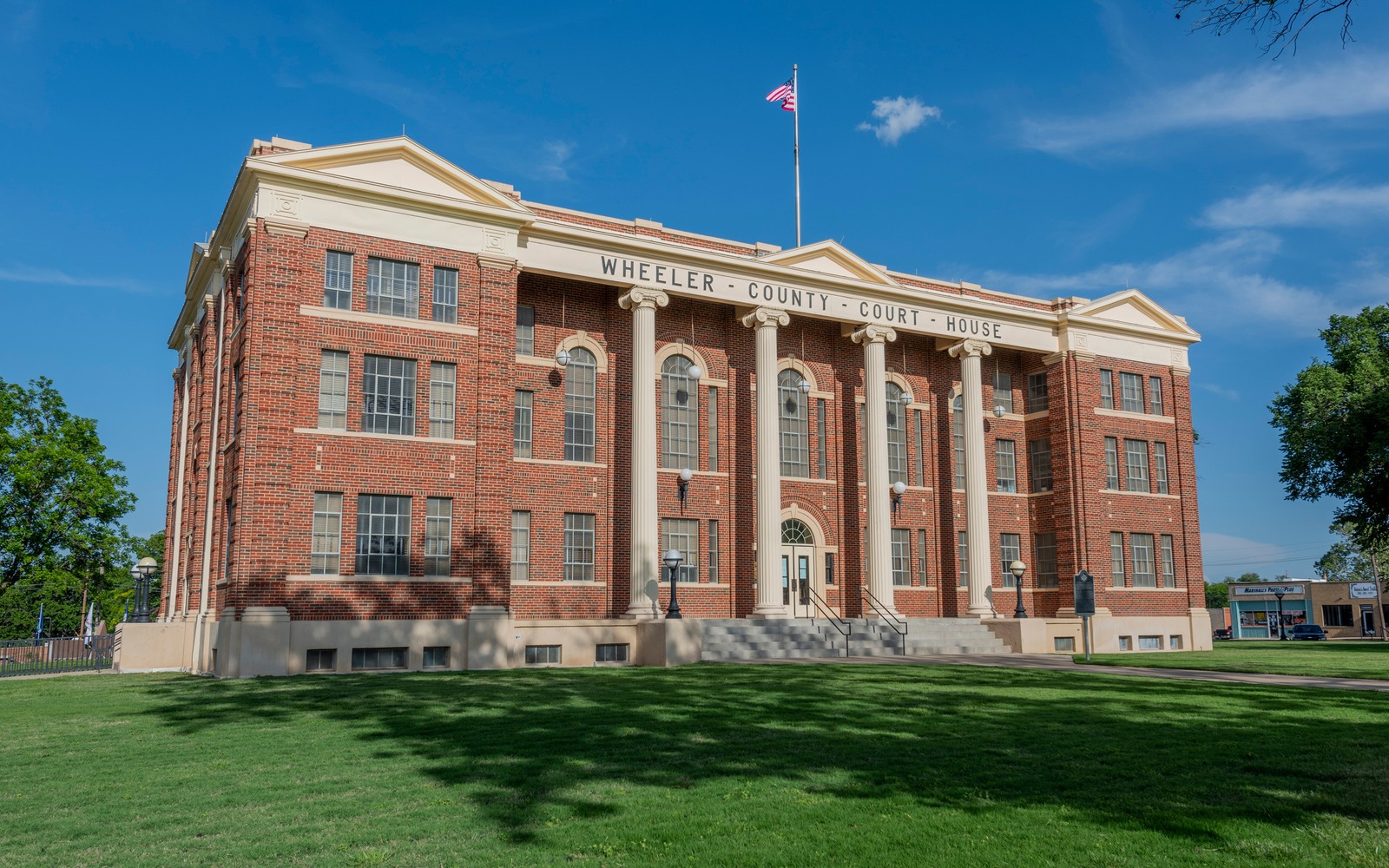
Wheeler County has been producing gas longer than most Texas counties, and if your family's minerals go back a few generations, they've likely seen conventional wells, tight gas, and the Granite Wash horizontal boom all pass through the same acreage.
This is Anadarko Basin country, out on the eastern edge of the Texas Panhandle where the county line runs against Oklahoma. Wheeler, the county seat, and the countryside around it have a long production history that started decades before the Granite Wash horizontal wells arrived around 2010 to 2014. That layered history is exactly why Wheeler County mineral files can be more complicated than they first look.
If you're holding an interest here, whether it's tied to an old vertical well from the 1970s or a more recent Granite Wash lateral, send us your paperwork and we will walk you through what it's actually worth today, not what it might have been worth at the peak of the drilling boom.
A basin that's been drilled in layers, not once
Wheeler County has conventional production going back generations, then tight gas development, then the Granite Wash horizontal push that brought operators like Chesapeake and later Cimarex, now part of Coterra, into the county drilling stacked pay zones. If your family's interest has an old lease from decades ago that's still technically active because of continuous production, it may also sit under acreage that's since been pooled into a much newer horizontal unit.
That layering is why we always ask for the current operator and well name rather than relying on the original lease alone. What's actively producing today, and under what unit designation, is what determines your royalty share now, and that can look quite different from what the lease terms suggested when it was first signed.
Courthouse records in Wheeler
The Wheeler County Clerk's office holds deed and lease records that, for older interests, can require some digging. Names change through marriage, township descriptions shift, and old-style legal descriptions sometimes need cross-referencing against Railroad Commission records to confirm which current unit they fall inside. It's not unusual for a Wheeler County interest to take a bit longer to fully document than a more recently developed county, but that extra step is what lets us make an accurate offer instead of a lowball guess.
Legacy production versus the boom years
Granite Wash drilling in Wheeler County slowed considerably after natural gas and NGL prices softened in the mid-2010s, and activity here now moves with commodity cycles more than it did during the initial land rush. That doesn't mean your interest has stopped producing, legacy wells here often keep going for years, but it does mean the pace of new development is less predictable than it was a decade ago. For owners tired of watching royalty checks track gas prices up and down, a lump-sum sale removes that uncertainty entirely.
Farm and ranch family ownership
A lot of Wheeler County mineral ownership traces back to farm and ranch families who homesteaded or bought this land in the early 1900s and kept the minerals when portions of the surface eventually sold or passed to different heirs. Split estate is common, and so is fractional ownership split among siblings, cousins, and in-laws after a couple of generations of inheritance.
We buy individual heir shares without requiring the whole extended family to act together, which matters a lot in counties like this one where families have deep roots and wide branches.
Texas Owner Questions
Your family's lease is from the 1970s. Is it still valid?
It can be, as long as the well has stayed in continuous production or the lease has been extended and pooled into a current unit. We will check the operator and production status before assuming anything about an old lease's status.
What's the Granite Wash and does it affect your interest?
It's a tight gas formation that operators drilled horizontally across parts of Wheeler County starting around 2010. If your minerals sit in a unit that includes a Granite Wash well, that's likely your primary current production, on top of whatever older conventional wells may also be on the tract.
How do old-style legal descriptions get matched to current units?
We cross-reference your deed's legal description against Railroad Commission unit and permit records to confirm exactly which current producing unit your tract falls inside. This is standard work for older Panhandle counties and doesn't require anything extra from you beyond the deed itself.
Do you buy interests with low or declining production?
Yes. Even legacy production well past its peak carries value, both from continuing cash flow and future development potential. We'll give you an honest number based on current activity, not the well's best years.
What if you are not sure which of your relatives inherited the mineral interest?
That's a common starting point for Wheeler County families. We can research the Wheeler County Clerk's probate and deed index to trace ownership back to the current holders, then confirm your specific share before making an offer.